
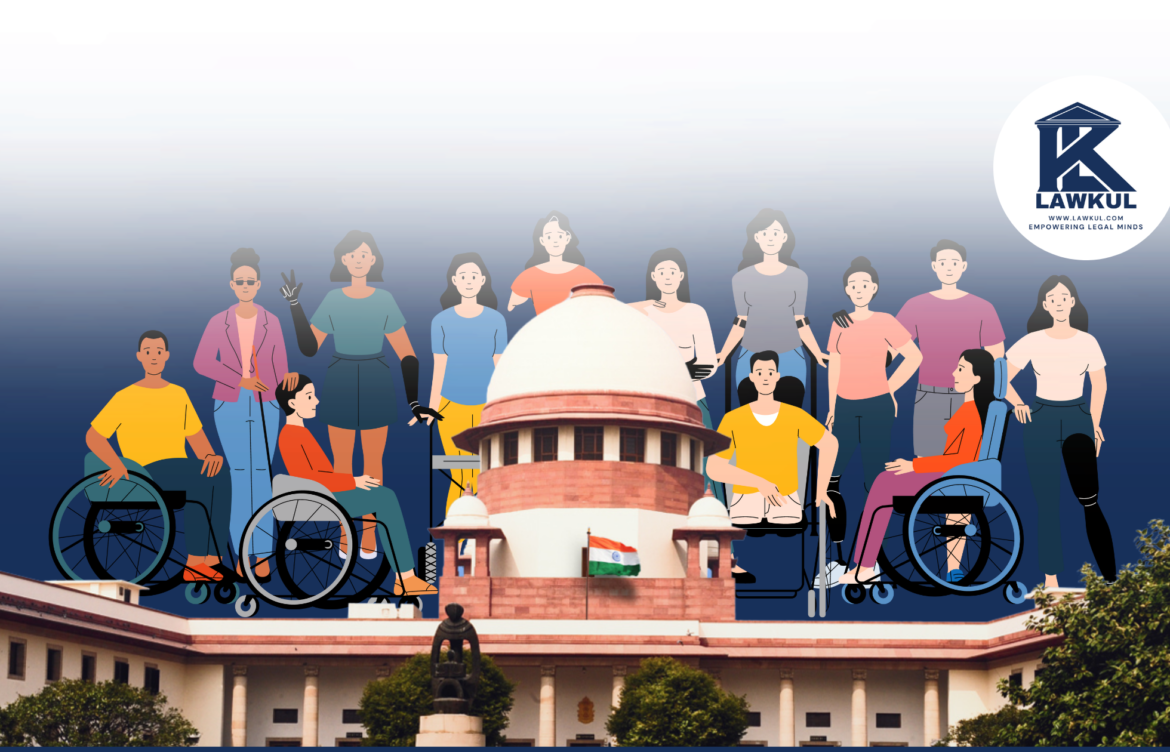
Supreme Court: Equal Retirement Age for All Persons with Disabilities
In a landmark judgment dated May 30, 2025, the Supreme Court of India ruled that differentiating retirement ages based on the type of disability constitutes unconstitutional discrimination under Article 14 of the Constitution. The Court emphasized that all recognized disabilities under the Rights of Persons with Disabilities Act, 2016, must receive equal treatment regarding retirement age, as they constitute a uniform category for employment-related benefits.
Case Background:
The case involved a 60% locomotor-disabled electrician employed by the Himachal Pradesh State Electricity Board, who was compelled to retire at the age of 58. In contrast, visually impaired employees were permitted to serve until 60 years under a 2013 state policy (OM 29.03.2013). The appellant challenged this policy as arbitrary discrimination, citing the Persons with Disabilities Act, 1995, and the Rights of Persons with Disabilities Act, 2016.
Court’s Observations:
The bench, comprising Justices Manoj Misra and KV Viswanathan, observed that there appeared no intelligible basis to confer the benefit of age extension to one disabled category and deny it to others when both are specified in the 1995 Act as well as the 2016 Act. The Court underscored that such distinctions between differently-abled employees are arbitrary, reinforcing the principle of equal treatment under disability laws, and thereby mandating uniform retirement benefits for all benchmark disabilities.
Outcome:
The Supreme Court set aside the impugned decision, granting relief to the appellant. The Court’s ruling reinforces the principle that all recognized disabilities under the Rights of Persons with Disabilities Act, 2016, must receive equal treatment regarding retirement age, as they constitute a uniform category for employment-related benefits.